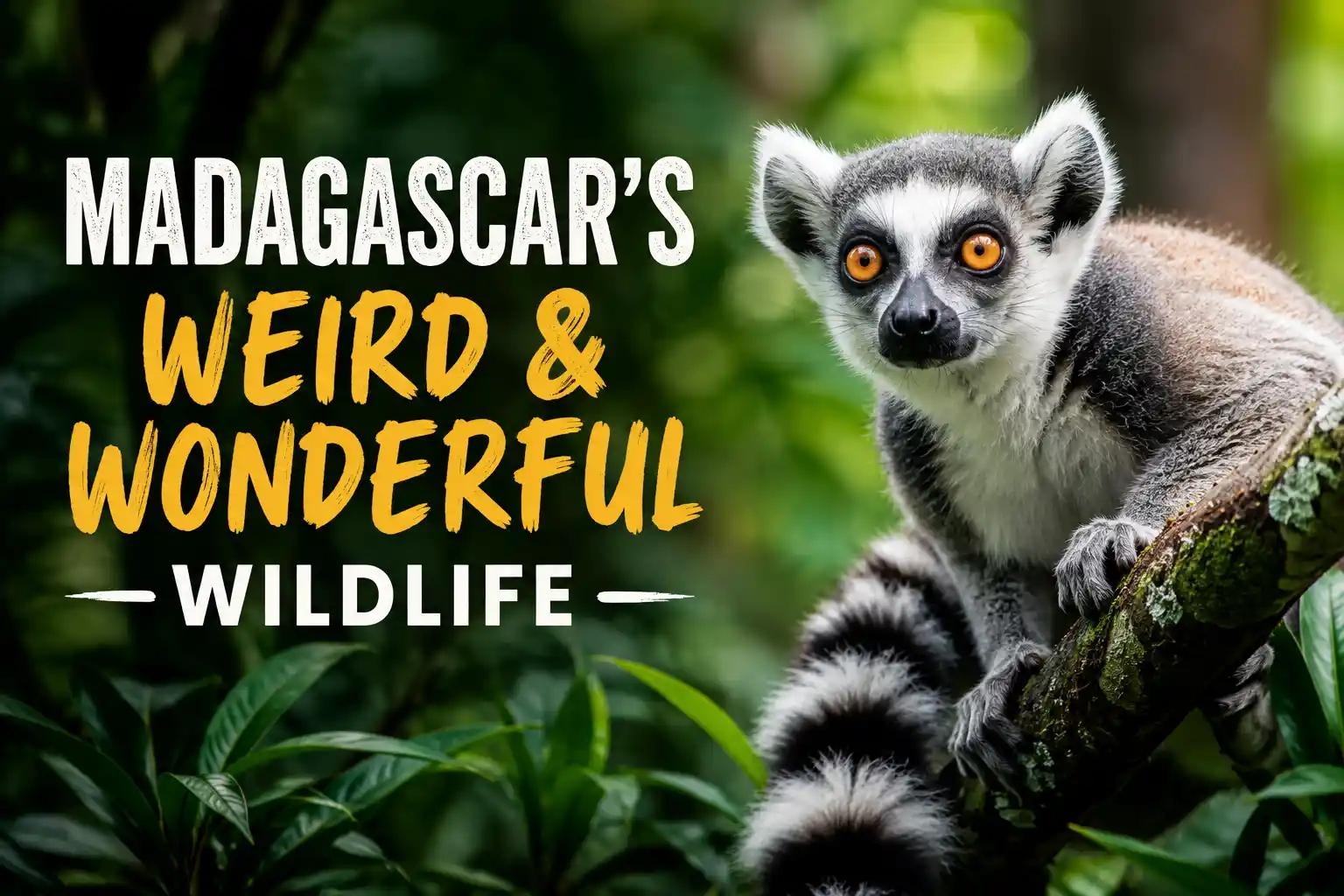

Introducing Madagascar’s Most Weird and Wonderful Creatures
Meet Madagascar’s wonderfully strange wildlife, from wide-eyed aye-ayes and dancing sifakas to tiny chameleons, leaf-tailed geckos, colorful frogs, and the elusive fossa.
Madagascar has a way of making even seasoned safari travelers stop and stare.
There are animals here that dance sideways through forests. Primates that tap on trees to find their dinner. Geckos that look uncannily like dead leaves. Chameleons small enough to make you question whether you actually saw one at all.
Separated from mainland Africa for millions of years, Madagascar developed into one of the planet’s great centers of endemism. Conservation International notes that roughly 80–90% of the island’s flora and fauna is endemic, while its varied habitats support an extraordinary concentration of species found nowhere else.
That makes a journey through Madagascar less about checking off a traditional safari list and more about discovering the wonderfully unexpected.
Ready to explore the island itself? Discover the Fair Trade Safaris Madagascar destination guide for inspiration on when to visit, where to go, and how to begin planning your journey.
1. The Aye-Aye: Madagascar’s Strangest Lemur
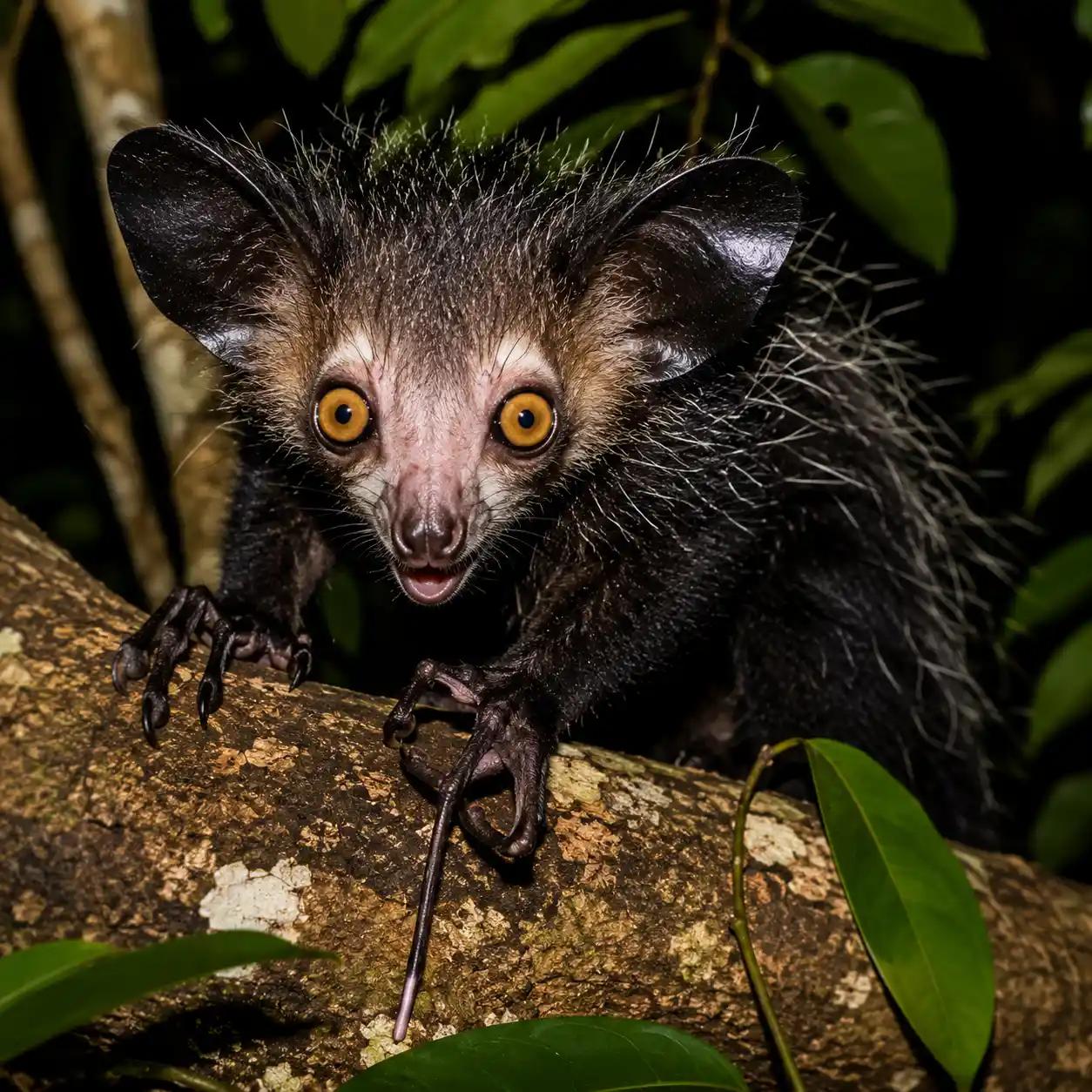
If Madagascar had an official ambassador for wonderfully weird wildlife, the aye-aye would be a serious contender.
This nocturnal lemur looks as though several different animals were combined into one: enormous ears, prominent teeth, bright eyes, a bushy tail, and extraordinarily elongated fingers.
Its most remarkable feature is its thin middle finger, which forms part of an ingenious feeding technique. An aye-aye searches trees for hidden food, making a nighttime encounter with one feel less like ordinary wildlife viewing and more like watching evolution demonstrate one of its most eccentric inventions.
Finding an aye-aye in the wild can require patience, a knowledgeable guide, and a willingness to explore after dark—which is precisely what makes the experience so memorable.
2. The Indri: The Lemur You Hear Before You See
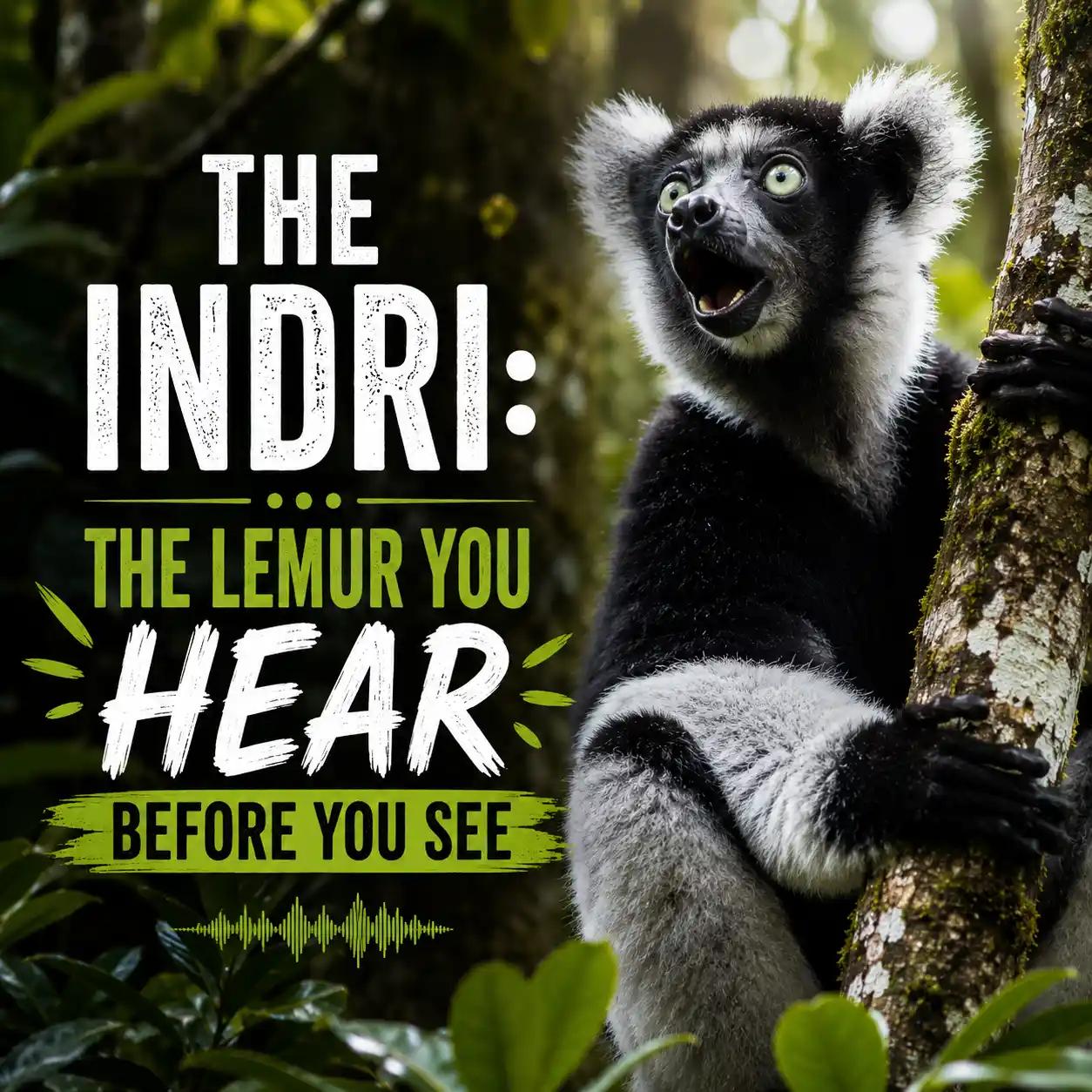
Walk into Madagascar’s eastern rainforest early in the morning and the forest may suddenly erupt with a haunting, far-carrying song.
Meet the indri.
One of the world's largest living lemurs, the indri communicates using powerful calls that can carry for up to two kilometers. Hearing several individuals calling through a misty forest is one of Madagascar's defining wildlife experiences.
Andasibe-Mantadia is one of the standout destinations for encountering them. Fair Trade Safaris highlights the park as one of Madagascar's essential wildlife destinations, with indris accompanied by other endemic birds, frogs, chameleons, and orchids.
Unlike a conventional game drive, the experience happens on foot. You follow forest trails with an expert guide, listening for calls and watching the canopy for movement.
It is slower, quieter, and beautifully immersive.
3. Sifakas: The Lemurs That Dance
Some animals walk. Others run.
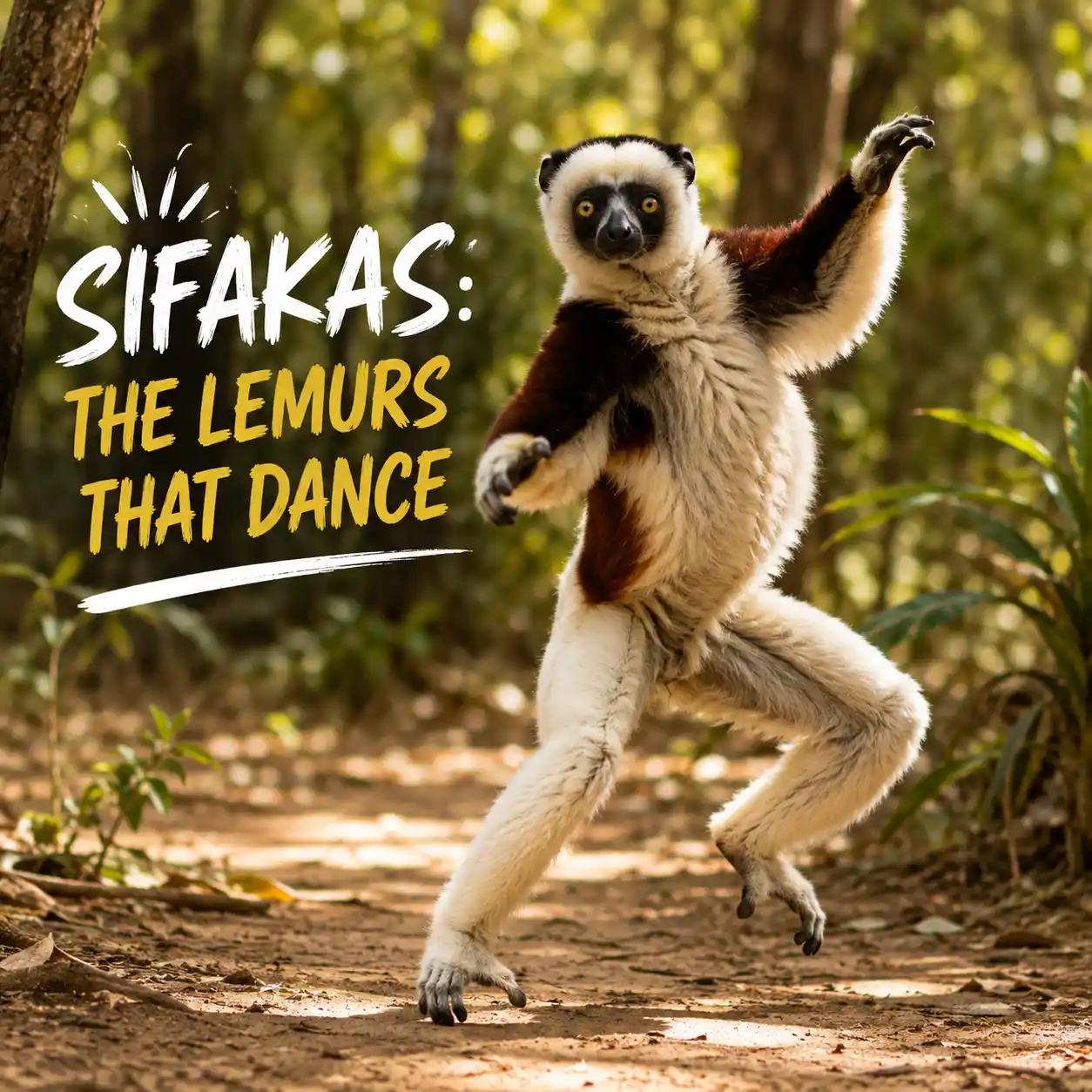
Sifakas seem to have decided neither option was quite dramatic enough.
These elegant lemurs are superbly adapted for moving through trees, but when certain sifakas travel across open ground, their anatomy produces an unforgettable sideways bounding movement. It is often described as “dancing.”
Seeing one leap effortlessly between trunks before bouncing across the earth is a reminder that Madagascar rewards travelers who arrive without expectations.
Lemurs are, of course, central to the Madagascar experience. More than 100 varieties occur on the island, and wild lemurs are one of the great reasons wildlife enthusiasts travel here.
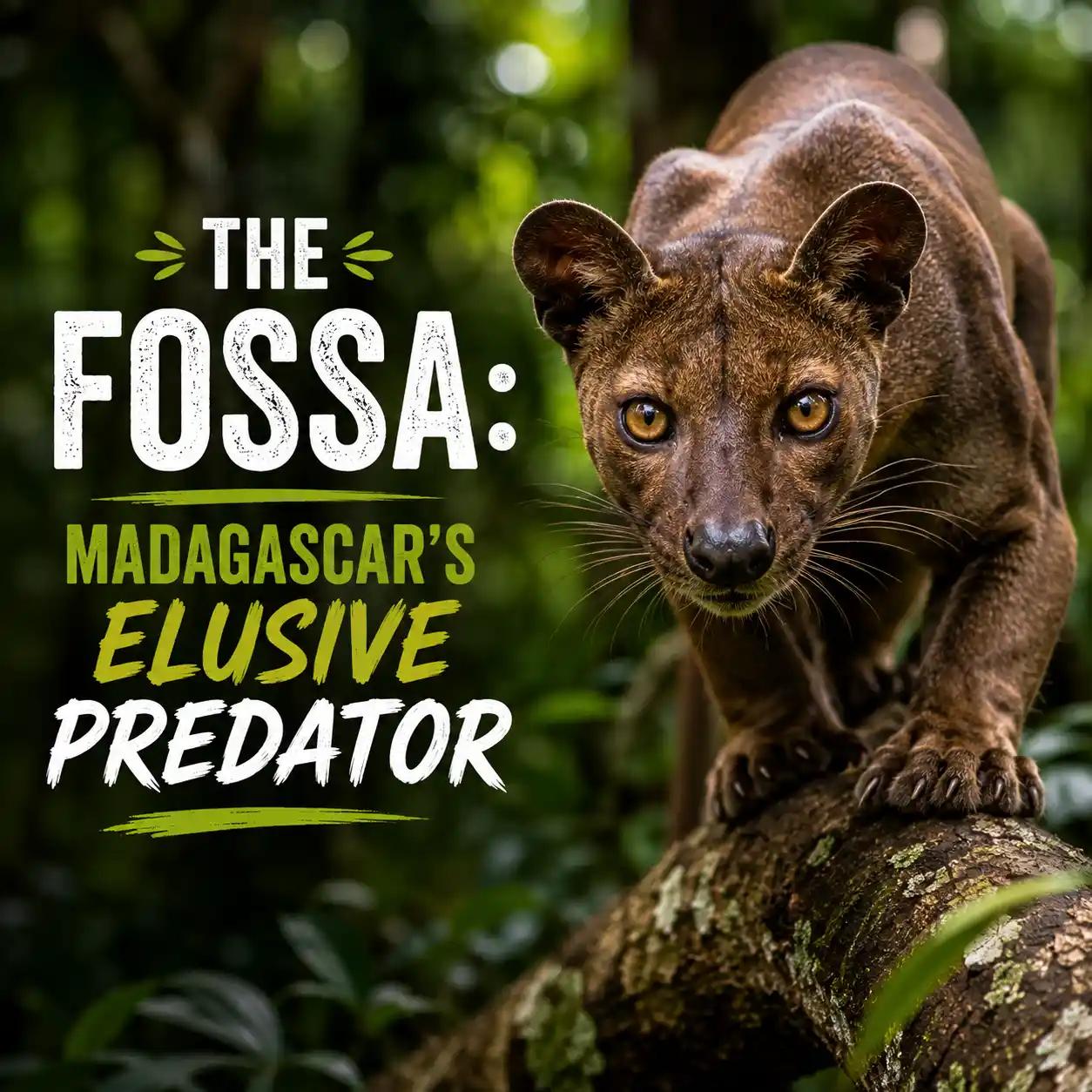
4. The Fossa: Madagascar’s Elusive Predator
At first glance, you might call it a cat.
Look again.
The fossa is Madagascar's distinctive top native terrestrial predator, with an elongated body and long tail that give it an athletic silhouette perfectly suited to pursuing prey through the forest.
Unlike Madagascar's charismatic lemurs, fossas can be frustratingly difficult to find. And that unpredictability is part of the appeal.
A sighting is never something to take for granted.
For wildlife lovers accustomed to tracking lions, leopards, or cheetahs elsewhere in Africa, searching for a fossa introduces an entirely different kind of predator encounter—one built around forest ecology, patience, and luck.
5. Leaf-Tailed Geckos: Masters of Disappearing
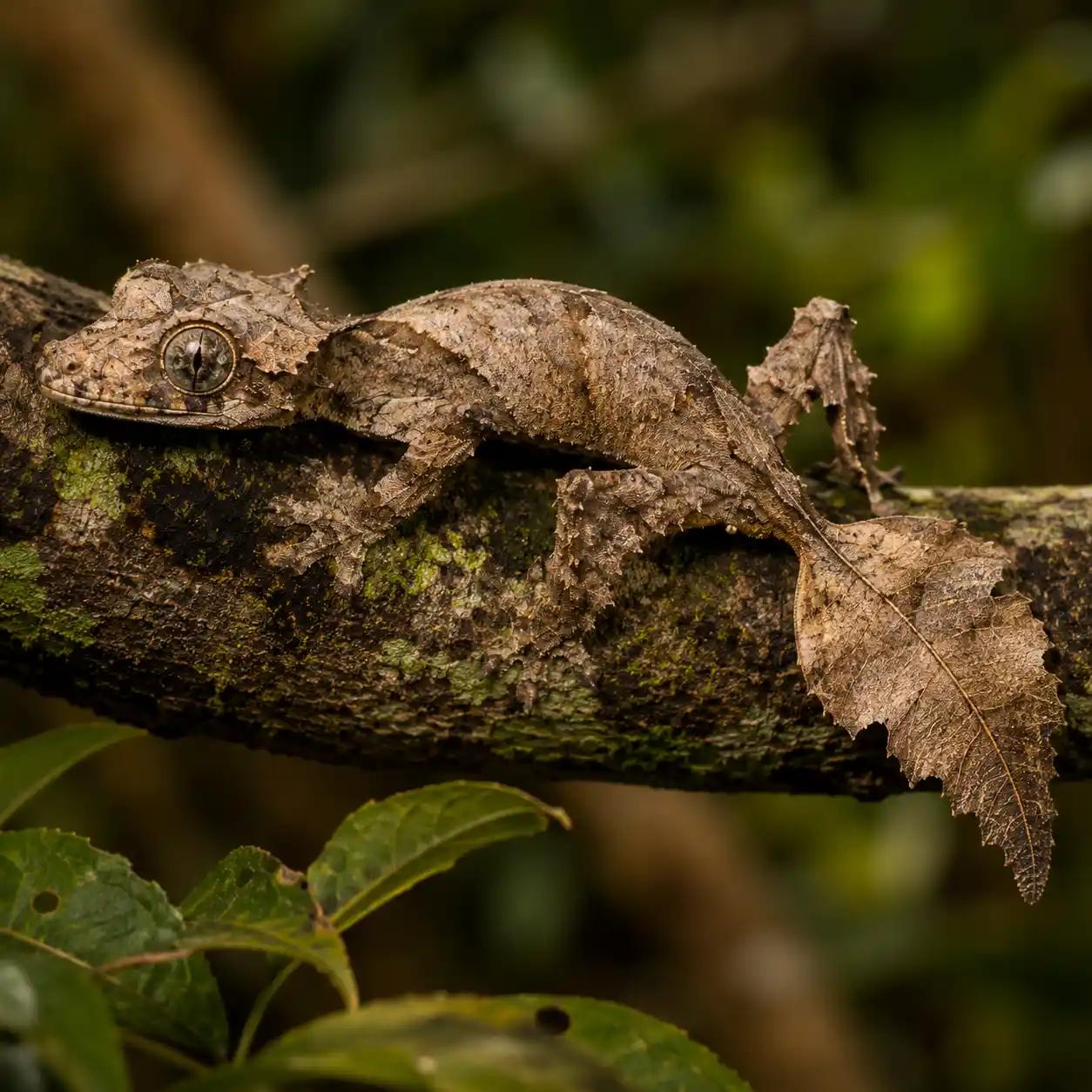
Madagascar's leaf-tailed geckos have perfected one of nature's greatest disappearing acts.
Some species have flattened bodies, irregular edges, mottled coloration, and tails that closely resemble leaves. Against tree bark or forest debris, they can become astonishingly difficult to distinguish from their surroundings.
Your guide might point directly at one.
You will stare.
Nothing.
Then suddenly, you see an eye—and the entire animal materializes in front of you.
These are exactly the encounters that make guided bush and forest walks in Madagascar so rewarding. The most fascinating wildlife isn't necessarily the largest. Sometimes the highlight of the day is an animal you nearly stepped past.
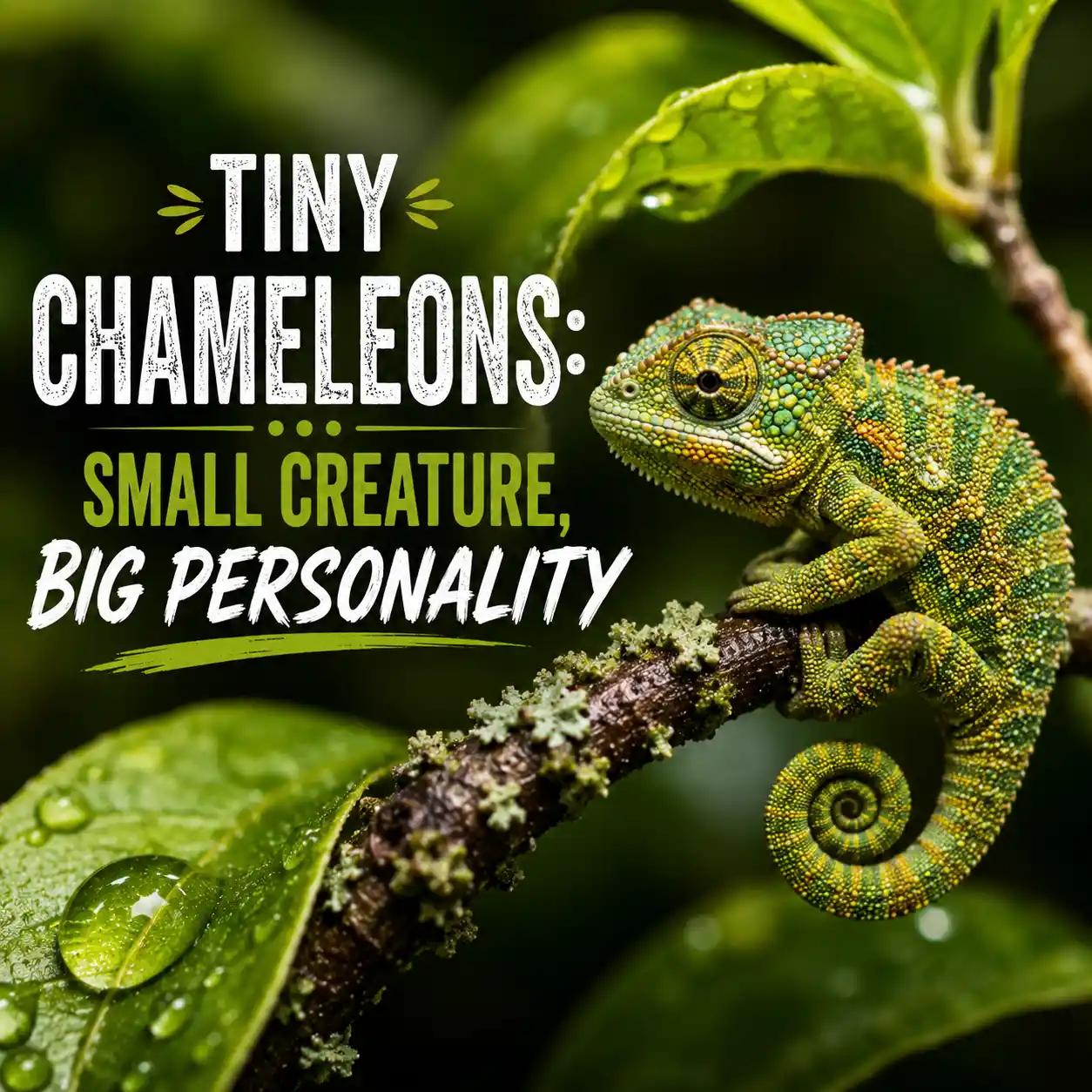
6. Tiny Chameleons: Small Creature, Big Personality
Madagascar is a dream destination for reptile enthusiasts, and its chameleons range from wonderfully flamboyant to almost impossibly miniature.
Searching for them changes the scale of a safari.
Instead of scanning the horizon for elephants, you may find yourself examining a branch, fern, or patch of forest floor while your guide reveals an entire miniature world hidden in plain sight.
The island supports extraordinary reptile diversity. Conservation International reports more than 300 reptile species in Madagascar, adding another dimension to its reputation for exceptional wildlife.
And yes, watching a chameleon independently swivel its eyes while slowly negotiating a branch is every bit as entertaining as it sounds.
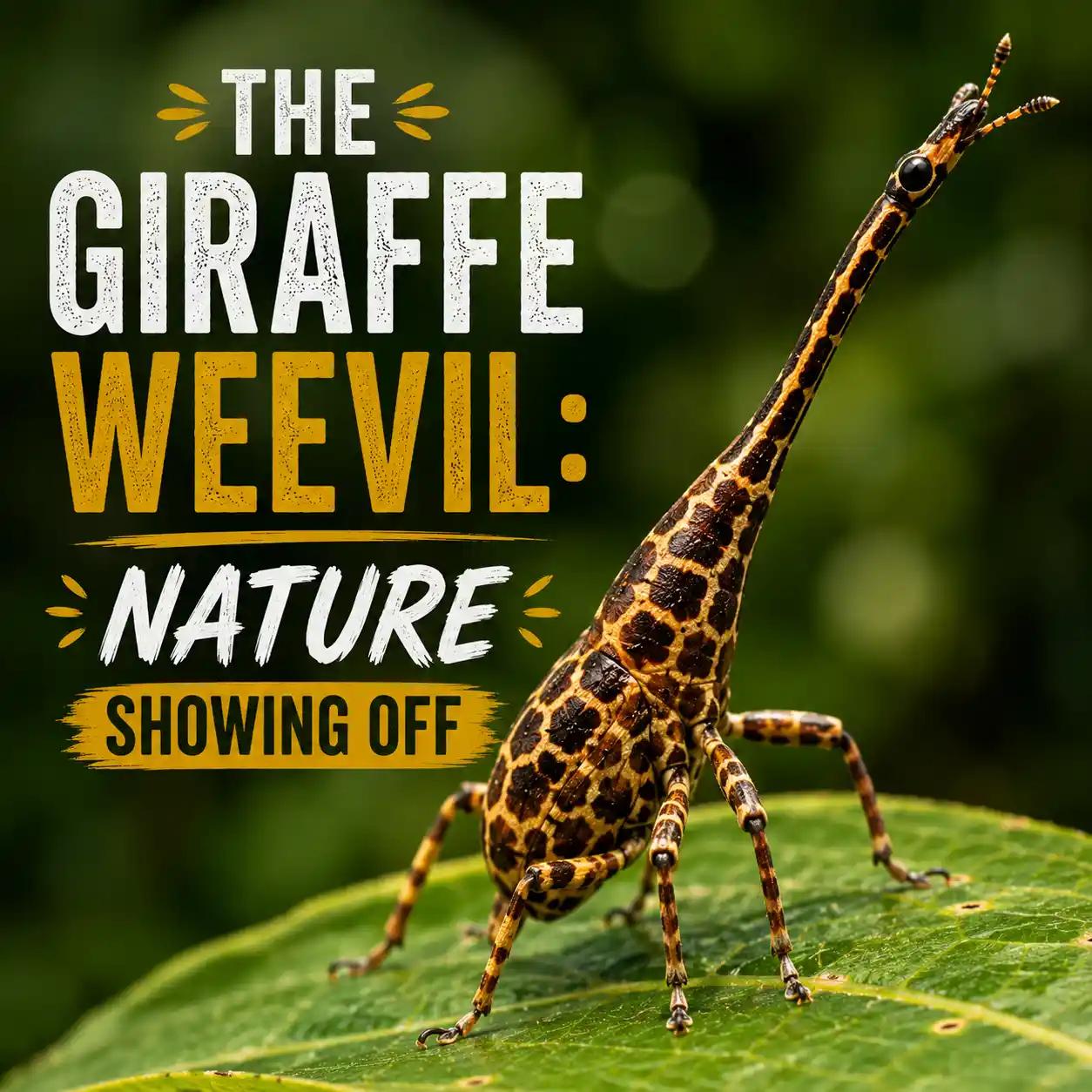
7. The Giraffe Weevil: Nature Showing Off
Not everything extraordinary in Madagascar has fur.
The giraffe weevil is one of the island's most memorable insects, named for the male's dramatically elongated neck.
Brightly colored and wonderfully disproportionate, it looks like something invented for an animated film rather than a creature quietly going about its business in a Malagasy forest.
It is also a perfect example of why Madagascar encourages travelers to pay attention to the details.
On a traditional safari, you may be waiting for something enormous to emerge from the grass.
Here, some of the greatest discoveries could be sitting on a leaf.
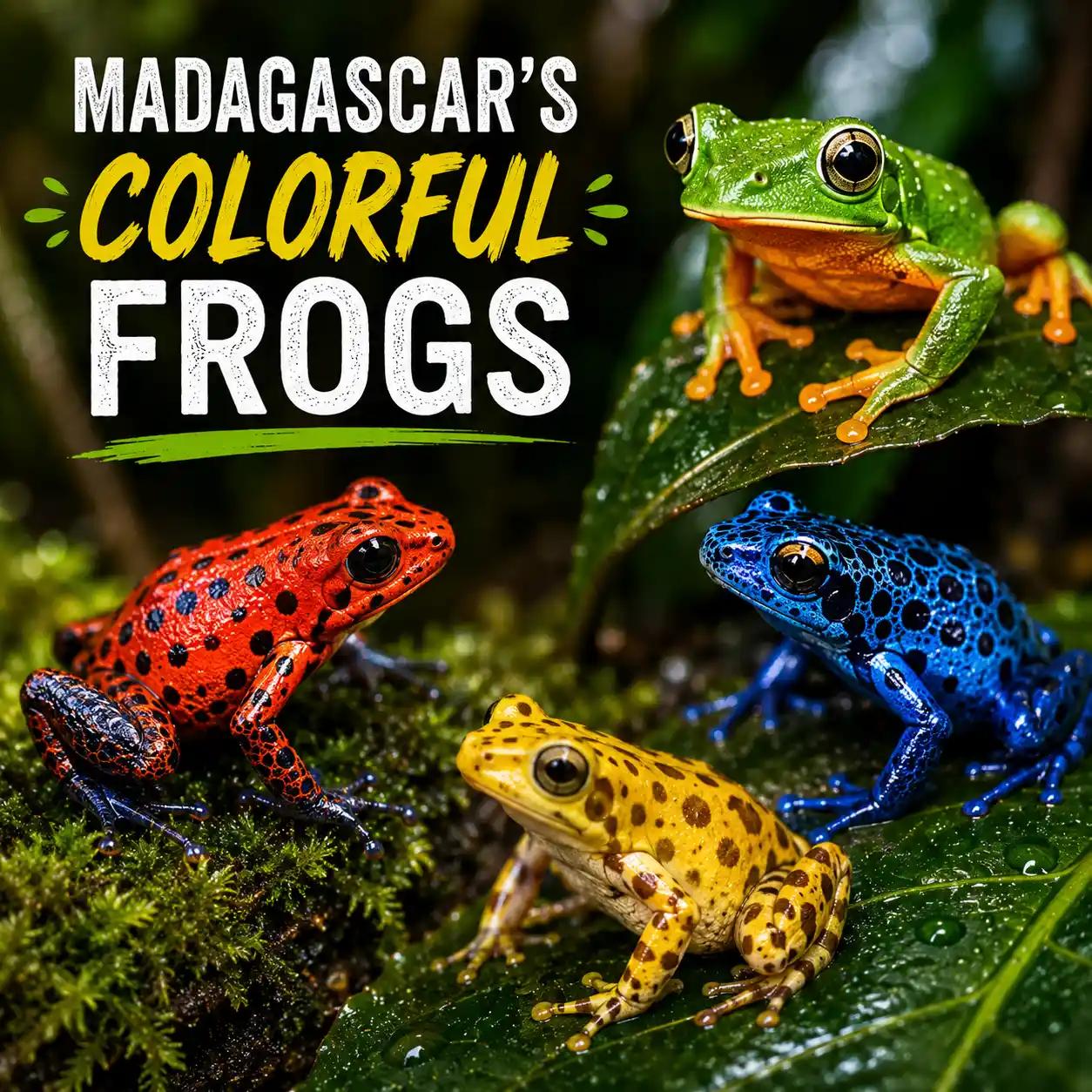
8. Madagascar’s Colorful Frogs
The island's eccentricity continues at ground level.
Madagascar is home to a remarkable collection of frogs, including the brilliantly colored Mantella genus. These small frogs are endemic to Madagascar and can display vivid coloration reminiscent of South America's poison dart frogs.
They can also be difficult to find.
That makes exploring with experienced local guides invaluable. A patch of wet vegetation that seems empty to an untrained eye can become an ecosystem of frogs, insects, reptiles, and tiny forest specialists once someone shows you where to look.
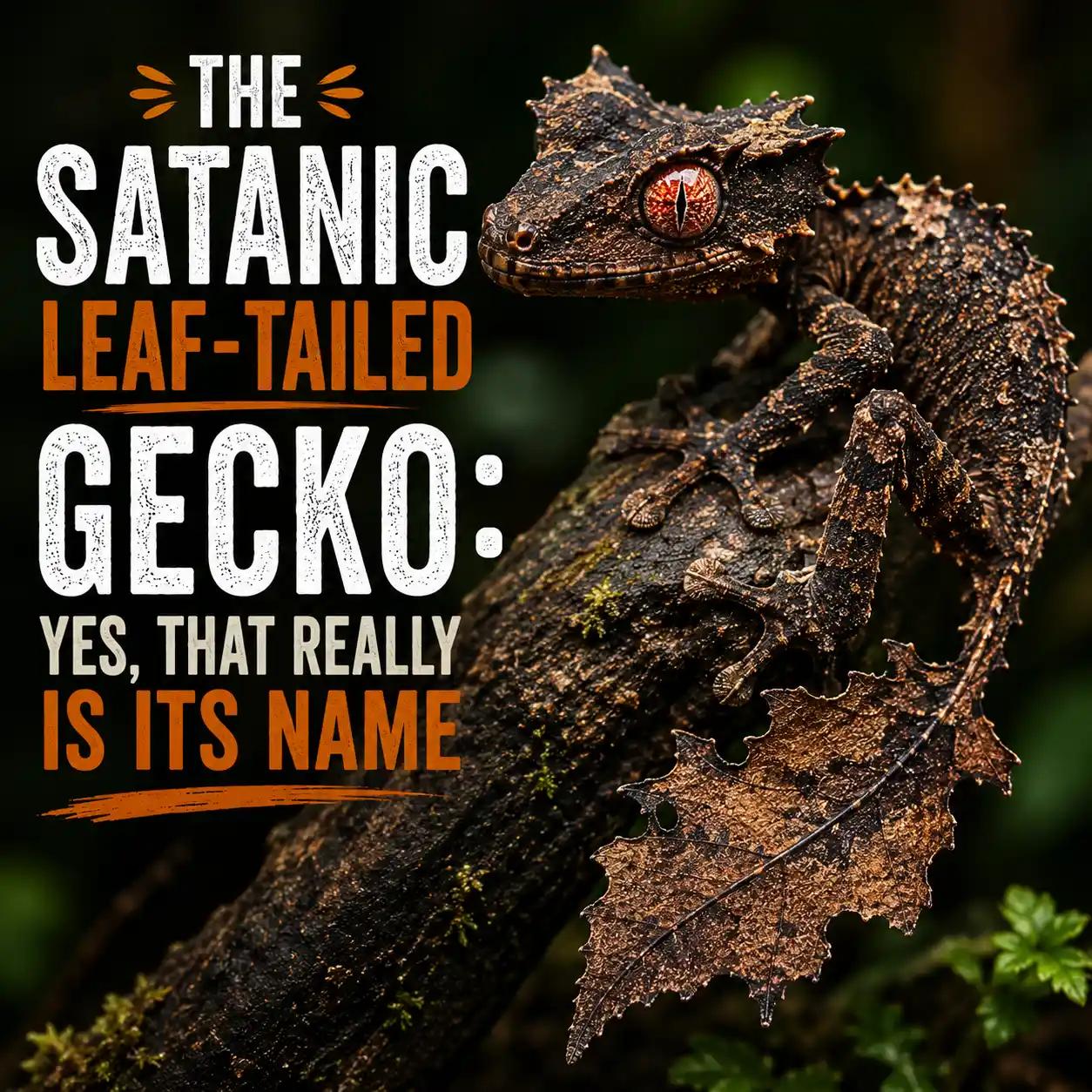
9. The Satanic Leaf-Tailed Gecko: Yes, That Really Is Its Name
Madagascar clearly wasn't satisfied with ordinary camouflage.
The satanic leaf-tailed gecko takes the leaf disguise to another level. Its body coloration, texture, and leaf-like tail allow it to blend into forest environments with remarkable effectiveness.
Despite the theatrical name, the animal itself is another beautiful example of Madagascar's evolutionary specialization.
Encountering one in its natural habitat is also a fantastic photography challenge. The goal isn't simply to capture the animal, but to photograph it in a way that reveals exactly why its camouflage works so well.
For travelers interested in wildlife photography, Madagascar can be wonderfully demanding. It rewards patience, observation, and respect for the animal rather than pursuit of the perfect shot.
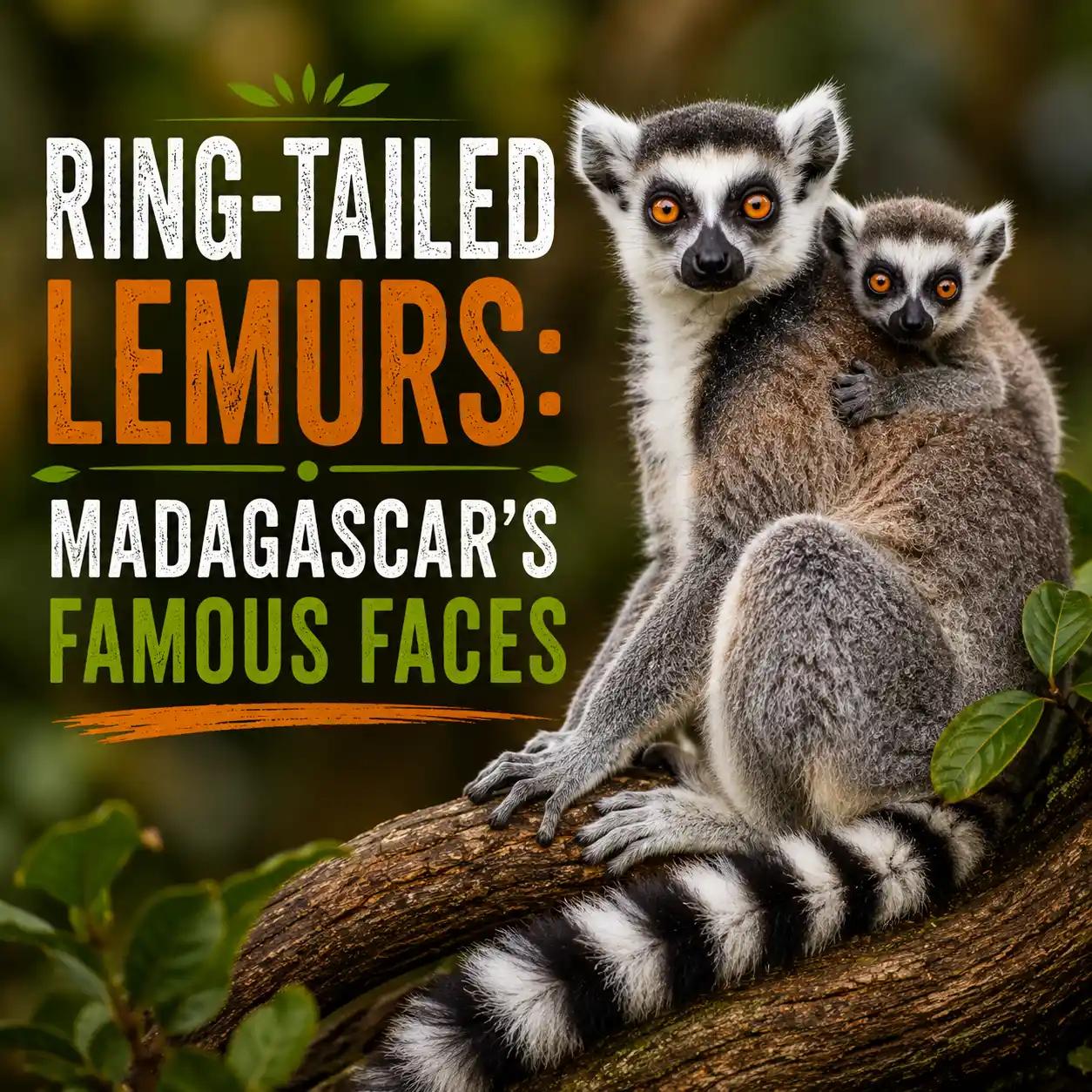
10. Ring-Tailed Lemurs: Madagascar’s Famous Faces
Some Madagascar wildlife is weird.
Some is wonderful.
Ring-tailed lemurs manage to be both.
Their black-and-white tails have made them internationally recognizable, but seeing lemurs in the wild bears little resemblance to seeing them on a screen.
You begin noticing social interactions, vocalizations, grooming, feeding, and the way groups navigate their habitat. Suddenly, a familiar species becomes something far more complex.
That is one of Madagascar's great gifts: it turns curiosity into connection.
Madagascar Is More Than a Wildlife Checklist
It would be easy to plan a Madagascar journey around a list of species.
Aye-aye: check.
Indri: check.
Chameleon: check.
But that misses what makes the island so compelling.
Madagascar is about ecosystems—the rainforests of the east, dry forests and baobab landscapes, extraordinary limestone formations, and tropical coastlines washed by the Indian Ocean.
Tsingy de Bemaraha offers an almost surreal landscape of jagged limestone pinnacles, while Nosy Be brings tropical beaches, snorkeling, whale watching, and excursions to encounter black lemurs on nearby Nosy Komba.
That combination opens the door to a beautifully layered itinerary: forest trekking in search of lemurs, guided night walks for nocturnal creatures, cultural experiences with Malagasy communities, conservation-focused activities, and a beach extension beside the Indian Ocean.
It is not the classic game-drive safari.
That is precisely the point.
Why Conservation Matters Here
Madagascar's uniqueness also makes it exceptionally vulnerable.
Species that occur nowhere else cannot simply relocate if their habitat disappears. Conservation International is working with communities to protect and restore critical landscapes, including tropical forest corridors that provide habitat for endangered lemurs and other wildlife.
Community involvement is especially important. Conservation initiatives in the Ankeniheny-Zahamena Corridor, for example, combine habitat and lemur protection with local patrols, environmental education, and livelihood programs designed to reduce pressure on forests.
For travelers, this gives a Madagascar safari deeper significance.
Choosing responsible guides, conservation-minded accommodations, locally connected experiences, and thoughtful operators helps ensure that tourism creates meaningful economic reasons to keep wild places wild.
For more on this philosophy, read Fair Trade Safaris' guide to regenerative travel in Africa.
When Should You Visit Madagascar?
For many travelers, April through November offers favorable conditions for exploring Madagascar, with comparatively dry, cooler weather suited to national parks and beach stays. Fair Trade Safaris recommends considering travel outside the busiest July and August period where possible, while the wetter December-to-March season can make some journeys more challenging.
The ideal timing ultimately depends on what you want to see.
A Madagascar itinerary built around rainforest wildlife may look different from one combining national parks with whale watching, snorkeling, remote beaches, or an Indian Ocean extension.
This is a destination where thoughtful planning matters.
Final Thoughts
Madagascar reminds us that wildlife doesn't need to be enormous to be extraordinary.
Sometimes wonder is a lemur singing through a rainforest.
Sometimes it is a gecko masquerading as a dead leaf.
Sometimes it is an insect with an absurdly long neck or a tiny frog hiding beneath a log.
And sometimes it is simply realizing that you are standing on an island where millions of years of isolation have produced creatures found nowhere else on Earth.
For travelers who have already experienced a classic African safari—or anyone who prefers the rare, unexpected, and wonderfully unconventional—Madagascar deserves a place near the top of the list.
Come for the lemurs.
Stay for everything you never knew existed.
Ready to Meet Madagascar’s Wildest Residents?
Go beyond the traditional safari and discover an island of singing lemurs, hidden geckos, extraordinary forests, dramatic landscapes, cultural encounters, and Indian Ocean escapes.
Explore MadagascarReady to share your thoughts?
We love hearing from mindful travelers. Leave a comment below.