Africa's Most Endangered Animals | Where to See Them

10 of Africa's Most Endangered Animals—and Where to See Them
Discover ten of Africa's most endangered animals, learn why they matter, and explore the best safari destinations where responsible tourism helps protect their future.
Africa is home to the greatest concentration of wildlife on the planet. From the vast grasslands of the Serengeti to the floodplains of the Okavango Delta and the ancient forests of the Virunga Mountains, the continent still offers some of Earth's last truly wild places.
Yet behind these extraordinary landscapes lies a sobering reality. Many of Africa's most iconic species are under increasing pressure from habitat loss, poaching, climate change, disease, and human-wildlife conflict. While conservation efforts have delivered remarkable success stories, countless animals remain on the IUCN Red List of Threatened Species.
The encouraging news is that responsible tourism is helping to change that. Every ethically managed safari, gorilla trek, and conservation-focused journey contributes to protecting wildlife, supporting local communities, and preserving the ecosystems these animals call home.
Here are ten of Africa's most endangered animals—and the best places to encounter them in the wild.
1. Cheetah
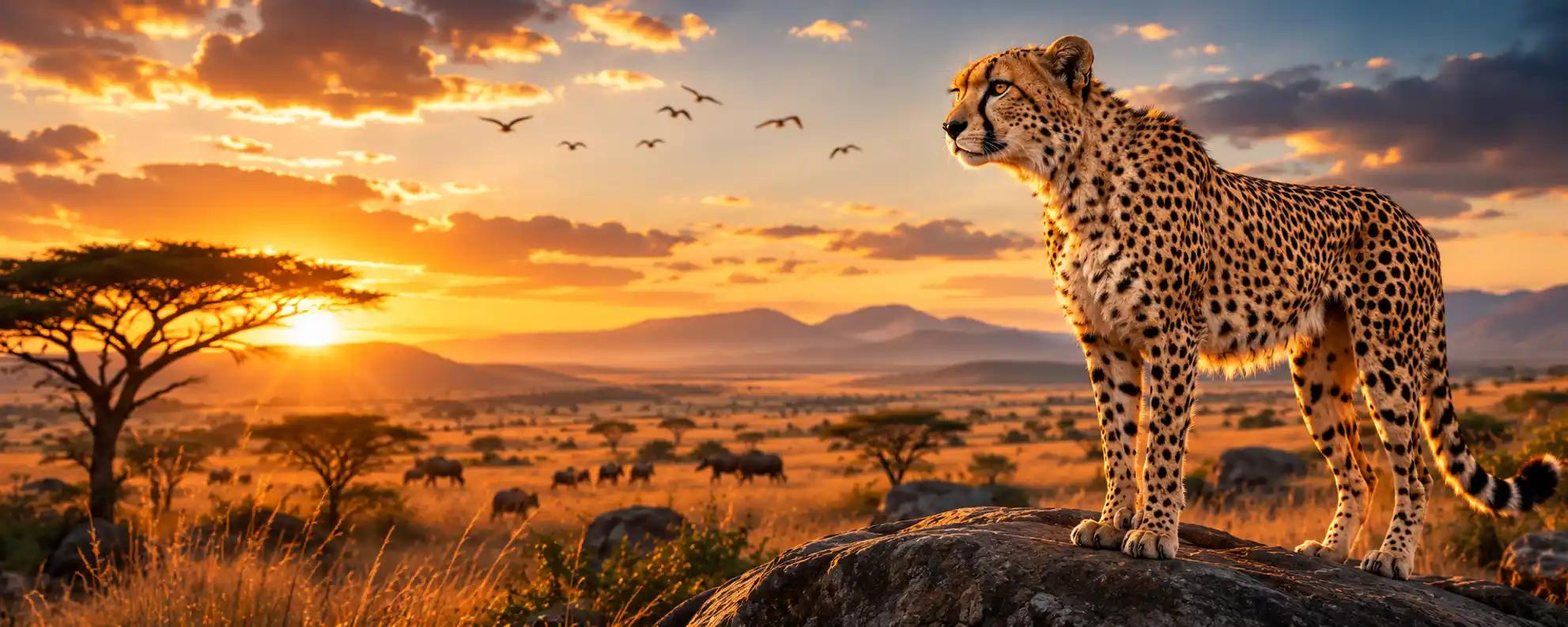
Built for speed rather than strength, the cheetah is unlike any other big cat. With its lightweight frame, long limbs, and distinctive black "tear marks," it can accelerate from 0 to 100 km/h (62 mph) in just a few seconds, reaching top speeds of around 120 km/h (75 mph) across open grasslands.
Despite its remarkable abilities, the cheetah is Africa's most threatened large cat. Habitat fragmentation, conflict with farmers, and declining prey populations have reduced its numbers to an estimated 7,000–8,000 individuals across the continent.
Because cheetahs hunt during daylight, they are often among the easiest predators to observe on safari.
Where to see cheetahs
- Serengeti National Park, Tanzania
- Maasai Mara National Reserve, Kenya
- Phinda Private Game Reserve, South Africa
- Samara Karoo Reserve, South Africa
- Mountain Zebra National Park, South Africa
- Central Namibia
2. Mountain Gorilla
Few wildlife encounters are as moving as spending an hour with a family of mountain gorillas.
Sharing more than 98% of our DNA, these gentle giants inhabit only two isolated mountain forests spanning Uganda, Rwanda, and the Democratic Republic of Congo. Once pushed to the brink of extinction, the mountain gorilla has become one of Africa's greatest conservation success stories.
Strict visitor limits, anti-poaching initiatives, veterinary programmes, and permit revenue have helped the population recover from around 600 individuals in the 1970s to more than 1,000 today.
Every gorilla trekking permit directly contributes to protecting the species and supporting surrounding communities.
Where to see mountain gorillas
- Bwindi Impenetrable National Park, Uganda
- Mgahinga Gorilla National Park, Uganda
- Volcanoes National Park, Rwanda
- Virunga National Park, DR Congo
3. Ethiopian Wolf
Elegant, elusive, and found nowhere else on Earth, the Ethiopian wolf is Africa's rarest carnivore and the world's most endangered wild canid.
Unlike most wolves, it specialises in hunting giant mole-rats and other burrowing rodents across Ethiopia's Afro-alpine moorlands. Today, fewer than 500 adults survive in a handful of isolated mountain ranges, leaving the species particularly vulnerable to disease outbreaks and habitat loss.
Watching one patrol the high-altitude grasslands is among Africa's most underrated wildlife experiences.
Where to see Ethiopian wolves
- Bale Mountains National Park, Ethiopia
4. Grevy's Zebra
Instantly recognisable by its narrow black-and-white stripes, rounded ears, and tall stature, Grevy's zebra is the largest of the world's three zebra species.
Once widespread throughout the Horn of Africa, its population has declined by more than 80% over the past few decades. Today, northern Kenya is home to the vast majority of the world's remaining Grevy's zebras.
Thanks to community conservancies and dedicated conservation programmes, there is growing optimism for the species' future.
Where to see Grevy's zebra
- Laikipia Conservancies
- Samburu National Reserve
- Buffalo Springs National Reserve
5. Black Rhino
Smaller and more temperamental than its white rhino cousin, the black rhino has endured decades of relentless poaching driven by the illegal wildlife trade.
Intensive protection has helped populations slowly recover, but the species remains Endangered, with around 5,000 individuals surviving in carefully protected reserves across Africa.
Seeing a black rhino in the wild remains one of safari's most unforgettable moments.
Where to see black rhinos
- Ngorongoro Crater, Tanzania
- Laikipia Conservancies, Kenya
- Etosha National Park, Namibia
- Matobo National Park, Zimbabwe
- Select private reserves in South Africa
6. African Wild Dog
Also known as the painted wolf, the African wild dog is one of Africa's most successful hunters, achieving hunting success rates that surpass lions and leopards.
Highly intelligent and intensely social, packs cooperate to hunt, raise pups, and care for injured members. Yet despite their remarkable adaptability, fewer than 7,000 remain across Africa due to habitat fragmentation, disease, and conflict with humans.
Their rarity makes every sighting feel truly special.
Where to see African wild dogs
- Greater Kruger, South Africa
- Lower Zambezi National Park, Zambia
- Nyerere National Park, Tanzania
7. Walia Ibex
Found only in Ethiopia's spectacular Simien Mountains, the Walia ibex is Africa's only indigenous wild goat.
Males are instantly recognisable by their impressive curved horns, which can exceed one metre in length. Once reduced to barely 200 individuals, decades of conservation work have helped the population recover to over 1,000 animals.
Their dramatic cliffside habitat makes every encounter as memorable as the species itself.
Where to see Walia ibex
- Simien Mountains National Park
8. Mountain Nyala
Discovered by Western scientists only in 1908, the mountain nyala remains one of Africa's least-known large mammals.
Restricted entirely to Ethiopia's southern highlands, this handsome antelope inhabits forests of juniper and hagenia, where fewer than 2,000 individuals survive today.
Its limited range makes it one of Africa's true wildlife treasures.
Where to see mountain nyalas
- Bale Mountains National Park
9. African Penguin
Not every African wildlife experience takes place on safari.
The African penguin, affectionately known as the "jackass penguin" because of its donkey-like call, inhabits the rocky coastline of South Africa and Namibia. Once numbering in the millions, populations have fallen dramatically due to overfishing, habitat degradation, pollution, and climate change.
Watching these charismatic birds waddle between granite boulders before diving effortlessly into the Atlantic Ocean offers an unforgettable contrast to a traditional safari.
Where to see African penguins
- Boulders Beach, Cape Town
10. Hirola
Often called the "four-eyed antelope" because of the distinctive pale markings around its eyes, the Hirola is one of Africa's rarest and most endangered mammals. Once roaming freely across northeastern Kenya and southwestern Somalia, its range has shrunk dramatically due to habitat loss, disease, drought, and competition with livestock.
Today, fewer than 500 Hirola are believed to survive in the wild, making it one of the world's rarest antelope species. Fortunately, dedicated conservation initiatives led by local communities and wildlife organisations are helping to secure its future through habitat restoration, predator management, and carefully protected breeding populations.
Although sightings remain exceptionally rare, seeing a Hirola represents one of Africa's most exclusive wildlife experiences—and a powerful reminder of why conservation matters.
Where to see Hirola
- Ishaqbini Hirola Conservancy, Kenya
- Protected areas surrounding Garissa, Kenya
Final Thoughts
Africa's endangered wildlife tells two stories at once. One is a story of loss, as many species continue to face mounting pressures across the continent. The other is a story of hope, where conservation, community partnerships, and responsible tourism are proving that recovery is possible.
Whether you're tracking mountain gorillas through mist-covered forests, watching a cheetah sprint across the Serengeti, or spotting the elusive Hirola in northern Kenya, every ethical wildlife encounter helps support the people and projects working to protect these remarkable animals.
At Fair Trade Safaris, we believe the most meaningful journeys do more than create unforgettable memories—they help safeguard Africa's extraordinary wildlife for generations to come.
Travel with Purpose. Protect Africa's Wildlife.
Experience extraordinary wildlife encounters while supporting conservation and local communities through carefully designed luxury safari itineraries.
Plan Your Conservation SafariReady to Plan Your Dream Safari?
Our safari specialists create tailor-made African journeys designed around your travel style, interests, and budget.
Ready to Plan Your Dream Safari?Ready to share your thoughts?
We love hearing from mindful travelers. Leave a comment below.